Commercial Waste Paddington

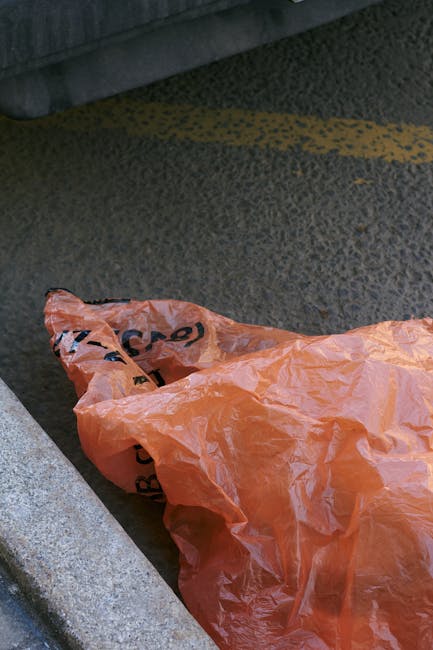
Commercial waste removal in Paddington should be straightforward, dependable and matched to the type of waste your premises actually produce. We provide a practical service for shops, offices, managed properties, hospitality venues and light industrial operators that need regular or one-off clearance of trade waste, bulky items and mixed recyclable materials. The aim is to keep waste moving away from the premises in a controlled way, with the right attention to sorting, loading and disposal.
Our work centres on commercial waste rather than general household clear-outs, so the service is shaped around business schedules, access arrangements and the kinds of items that build up in working environments. That may include bagged refuse, cardboard, office furniture, broken fixtures, redundant equipment and other non-hazardous material that needs removing without disrupting staff, customers or neighbouring occupiers. If you need a clear plan for a site or unit, we can help you organise it sensibly.
For a quotation, send through the basic details of the waste and the location access. If you are comparing options, our pricing and quotes page is a useful place to start, while a direct enquiry is the easiest way to confirm what can be collected and how the work can be arranged.
Regular collections for business premises
Commercial premises often need a collection pattern that reflects opening hours, storage space and the pace at which waste accumulates. A retail unit may need frequent removal of packaging and display materials, while a studio or office may only need occasional clearances of paper waste, old desks or shelving. We handle mixed commercial waste in a way that supports a clean working environment and reduces the chance of containers overflowing or stock areas being taken up by unwanted items.
Where a site produces material in steady volumes, planning matters as much as lifting and loading. Access routes, lift use, service entrances and loading bays all influence how a collection is managed. It helps to identify in advance whether items are loose, bagged, stacked or broken down, and whether there are any restrictions on timing or vehicle access. A short description at the quotation stage is usually enough to start the process. Clear information helps keep the collection practical and proportionate.
For many customers, the main decision is whether the waste should be removed as a one-off or as part of an ongoing arrangement. If the material build-up is predictable, repeat removals can be organised around your business rhythm. If the need is occasional, a single clearance may be all that is required. Either way, the focus is on removing waste safely, keeping the site usable and leaving the area ready for normal operations to continue.
Office clearances and workplace furniture
Offices typically produce a mixture of waste streams rather than a single type of rubbish. Old desks, chairs, filing units, partitions, monitors, printers, boxes and general refuse can all appear together when a space is being reconfigured or refreshed. Our commercial waste service covers the removal of these kinds of workplace items, provided they are suitable for collection and handling within the agreed scope.
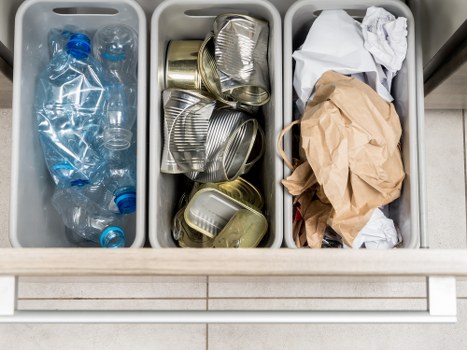
Office clearances often need more than simple lifting. Items may need separating so that reusable furniture, recyclable materials and general waste are handled appropriately. Cabinets can contain contents that must be removed before collection, and larger items may need to be carried through shared corridors or reception areas without causing obstruction. We take a measured approach that suits the building and the material, rather than forcing everything into one improvised visit.
H3 Space, access and sorting
Before collection, it is sensible to identify which items are staying, which are being removed and where the waste is stored. This is especially helpful where several departments share the same floor, or where waste has been gathered in more than one room. A simple list of item types is often enough to shape the work, and photographs can help if the material is mixed or bulky. Planning the route out of the premises can make the clearance smoother and reduce avoidable delays.
Shop, hospitality and mixed trade waste
Commercial waste removal in Paddington also needs to work for customer-facing premises such as shops, cafés, bars and restaurants. These environments can produce packaging, food-related waste, old fixtures, worn furniture and general rubbish that must be cleared without causing unnecessary disturbance to staff or visitors. We focus on practical removal rather than disruption, with the goal of keeping back-of-house areas useable and sales or service areas presentable.
Trade waste from hospitality and retail premises can be awkward because it is often a blend of light and bulky material. Cardboard may sit alongside broken shelving, kitchen items, promotional displays or obsolete equipment. In those cases, the main question is not just volume but the sort of handling each item needs. Some waste can be bagged and stacked, while other pieces may need careful lifting or partial dismantling before removal. That distinction matters when planning the job and the vehicle load.
It is also useful to think about timing. A collection before trading starts, after closing or during a quieter window may be more suitable than a mid-service visit. If you are arranging a quotation, tell us whether the work is for a front-of-house area, a stockroom, a preparation space or an entire unit. That helps keep the response grounded in the actual conditions on site rather than a generic estimate.
Bulky items, fixtures and office contents
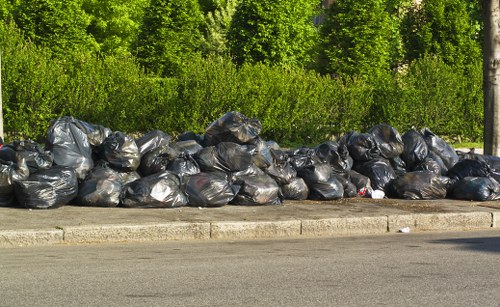
Some commercial waste jobs are centred on bulky items rather than bags or loose rubbish. That might include shelving, counters, reception units, worktops, storage cabinets, display structures or other fixtures that are no longer needed. These items often need dismantling or careful movement through tight internal routes before they can be taken away. We handle this kind of clearance as part of the wider commercial waste service where it fits the agreed scope.
Removing bulky material usually requires a little more coordination than an ordinary bag collection. The important points are whether items are fixed, how they are joined, how many people are needed to move them and what the site allows in terms of access. In some cases, it is more efficient to separate the larger pieces from smaller waste so the load can be handled in a sensible order. This approach helps keep the work organised and reduces unnecessary handling.
Where there are mixed contents, the waste may include both reusable-looking items and material that is simply due for disposal. Our role is to remove what has been agreed, not to overcomplicate the job. If you are unsure what counts as a bulky item or what can be included, a straightforward description is often enough. The best result comes from being clear about the items, the access and any limitations before the collection is booked.
Responsible handling and disposal choices
Commercial waste should not be treated as a single, undifferentiated load if the contents are varied. Different materials may need separating so they can be managed in the most appropriate way available within the service. Cardboard, metal, office furnishings, electrical items and general refuse all require different treatment once they have left the premises. The customer benefit is not just removal, but a cleaner and more orderly approach to what happens after collection.
We also recognise that businesses often want to minimise disruption while still keeping on top of waste. That means clear sorting where practical, careful loading, and an approach that avoids leaving stray items behind after the main load has gone. If a site has specific areas for waste storage, it helps to know whether the material is already gathered there or still spread through several rooms. Good organisation at this stage supports a cleaner handover once the work is finished.
H3 What to tell us for a quotation
- The type of premises and the main waste types
- Whether the items are bagged, loose, stacked or fixed in place
- How easy it is to reach the waste from the collection point
- Any timing limits, loading restrictions or site rules
- Whether the clearance is a one-off or part of a repeating need
Working around access, timing and site rules

Business waste collections work best when access is understood in advance. Shared entrances, managed buildings, lift use, parking restrictions and loading bays can all affect how a collection is carried out. A collection that looks simple from the street may require a specific route inside, a time window outside trading hours or a certain method of entry. We use the information provided to shape the visit sensibly rather than relying on assumptions.
For sites with several occupants, it is often useful to decide who will point out the waste and who can confirm the collection area on the day. That avoids confusion if the material is spread across floors, back rooms or locked storage spaces. If the items are being gathered specifically for removal, keeping them in one place makes the process easier. If not, a little preparation before the visit can save time once the collection starts. That is especially relevant where there are shared corridors, reception desks or narrow service routes.
Sometimes the main issue is not the amount of waste but the shape of the job. Large items, awkward corridors or limited loading space can all influence the method. A realistic quotation depends on those practical details, so it is worth explaining them clearly at the outset. If the collection involves more than one area or more than one floor, note that too. The more accurate the description, the better the arrangement can be matched to the site.
About Paddington
Paddington is an area in central and west London known for its transport links, canal-side routes and a mix of 19th-century and modern development. The name is associated with Paddington Station, a major railway terminus opened in the 19th century and later expanded as part of London’s wider rail network. The station area gives the district a strong identity, with movement, arrival and interchange remaining defining features of the locality. Nearby streets combine residential blocks, hotels, offices and commercial frontages, reflecting the area’s long connection to travel and business activity. The Grand Union Canal and the Paddington Basin add another layer to the district, bringing waterside paths, bridges and redeveloped public spaces into close proximity with the station environment. The basin area has seen substantial regeneration, with modern apartment buildings and office accommodation sitting alongside historic transport infrastructure. Paddington also lies close to Hyde Park and the wider West End, so it sits between large open green space and denser urban streets. The architectural character changes quickly from one block to the next, with stucco terraces, mews buildings, railway structures and newer towers creating a varied streetscape. This combination of transport, waterway and redevelopment gives the area a distinctive urban rhythm, shaped by both heritage and ongoing change. Its public spaces, travel connections and mixed building stock continue to make it a recognisable part of London rather than simply an extension of neighbouring districts.
One-off clearances and changing site conditions

Not every commercial waste requirement is repetitive. Some arise when a lease ends, a unit is reconfigured, stock is reduced, a back office is cleared or stored items have simply accumulated over time. In those cases, a one-off clearance can be the most suitable route. We handle these jobs with the same attention to access and item type, but without assuming that the premises need a standing arrangement. The important point is to remove the agreed material cleanly and efficiently.
One-off work can include mixed contents from several parts of the site, especially where waste has been placed wherever space could be found. In such cases, a full clear-out may need to be divided into sensible stages so the team can work through the items in a safe order. That can mean separating loose waste from furniture, or large pieces from smaller bagged rubbish, before loading begins. If certain items need to remain on site, make that clear before the visit so there is no confusion.
The best next step is simple: tell us what needs removing and how the space is laid out. If you already know the waste types, the access conditions and the timing you need, you can move straight towards a quotation. If you are still deciding how much should go, start with the items that are definitely leaving and build from there. For a clear, practical quote, contact us today.